XRay

XRay

XRay

An AR testbed combining real-time markerless motion capture with in-situ movement visualization.

Project Info

Start date

June 2026

End date

Funding

Artanim

Coordinator

Artanim

Summary

Beyond entertainment, motion capture has become a valuable tool in fields such as sports science, robotics, ergonomics and healthcare. In clinical settings, however, marker-based motion capture can remain cumbersome: preparing a patient with markers takes time and may limit its practical use for routine assessment.

This is where real-time markerless motion capture offers significant advantages. Patients can be tracked with minimal preparation and, in many cases, in their everyday clothing, making movement assessment faster and easier to integrate into clinical workflows.

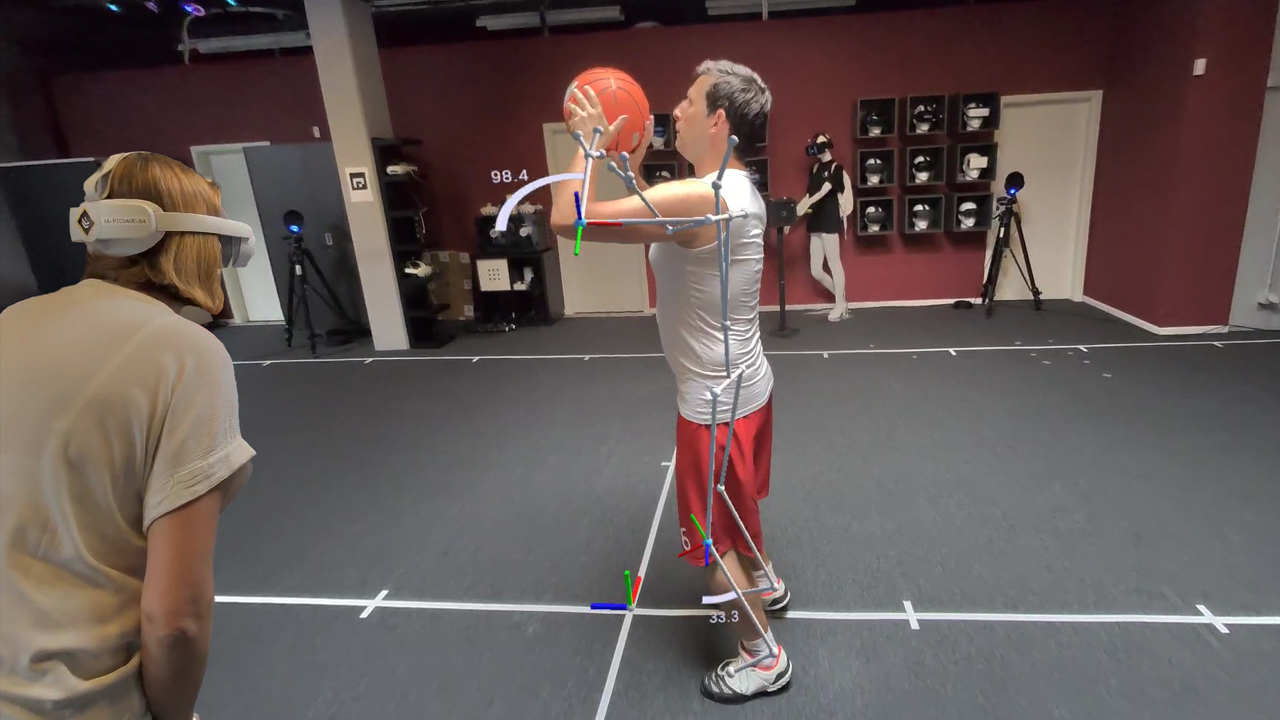
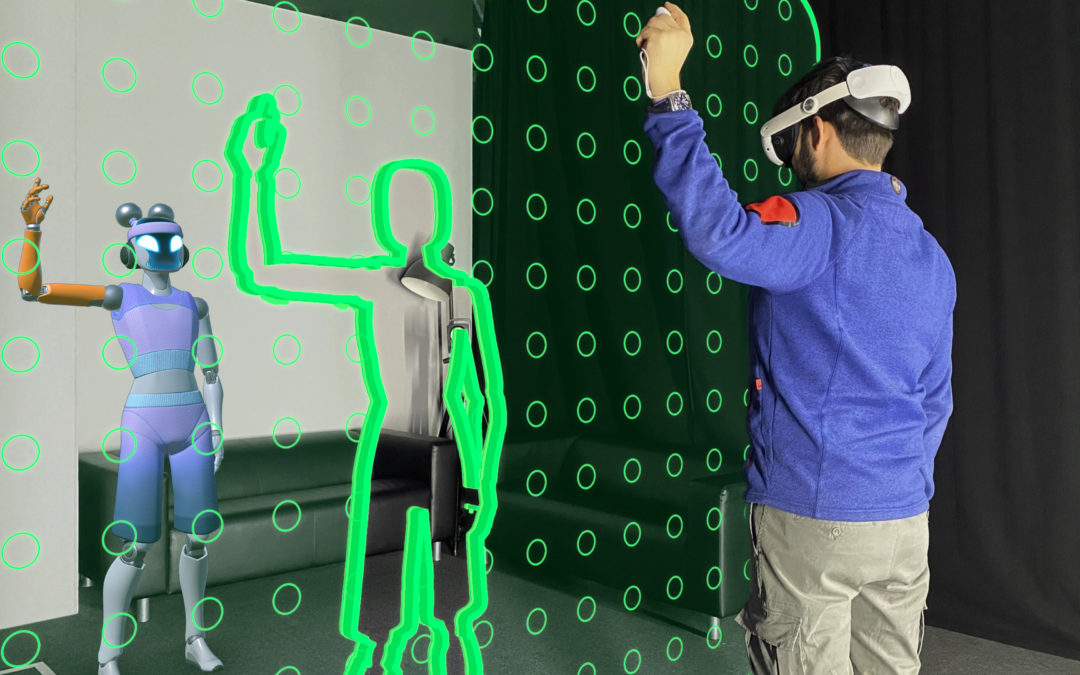
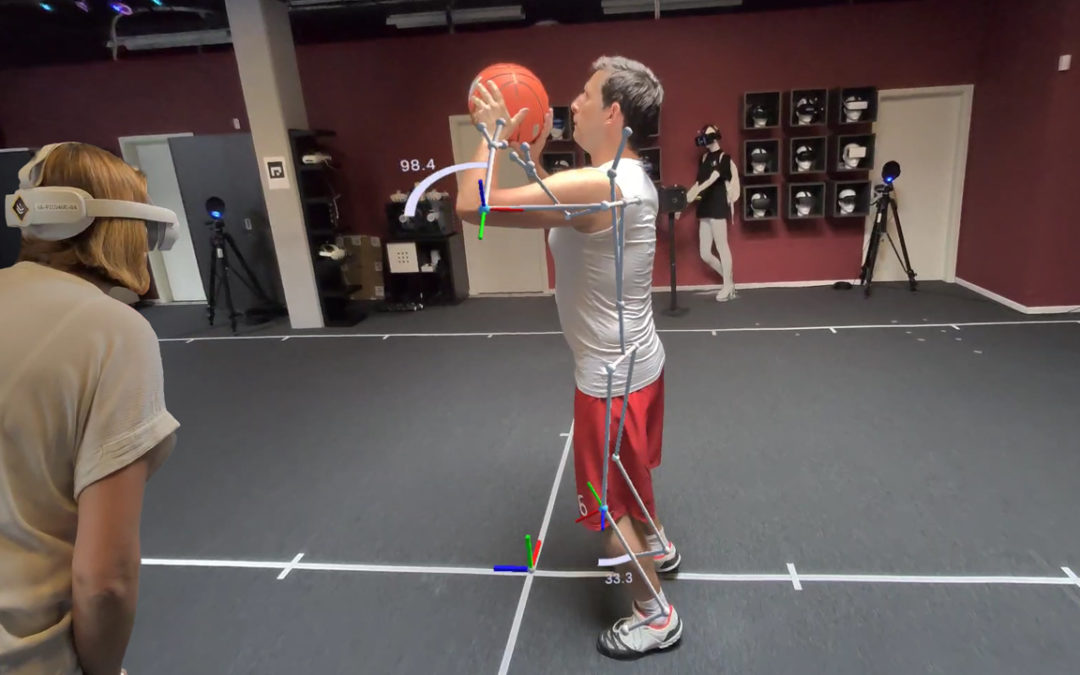
XRay explores how this motion data can be visualized directly in the examination space rather than only displayed on a conventional monitor. The project develops an augmented reality application that combines the video passthrough capabilities of modern XR headsets with real-time markerless tracking of one or more subjects, overlaying the reconstructed skeleton directly onto the live view of the patient.

Building on ideas first explored in the earlier HoloMed project, XRay takes advantage of recent advances in markerless motion capture, XR hardware and real-time visualization to investigate new approaches to movement assessment.

The application allows users to select relevant joints directly in space and visualize parameters such as joint angles and movement trajectories in real time. These tools can support the observation of specific regions of interest, for example during physical rehabilitation or functional movement assessment.

Throughout the project, Artanim is expanding the available visualization and analysis tools to investigate how the combination of markerless motion capture and augmented reality can support healthcare applications, with particular attention to education, evaluation and rehabilitation.
Curate XR

Curate XR

Curate XR

An XR research platform exploring natural interaction with context-aware AI-powered virtual agents.

Project Info

Start date

January 2025

End date

Funding

Artanim

Coordinator

Artanim

Summary

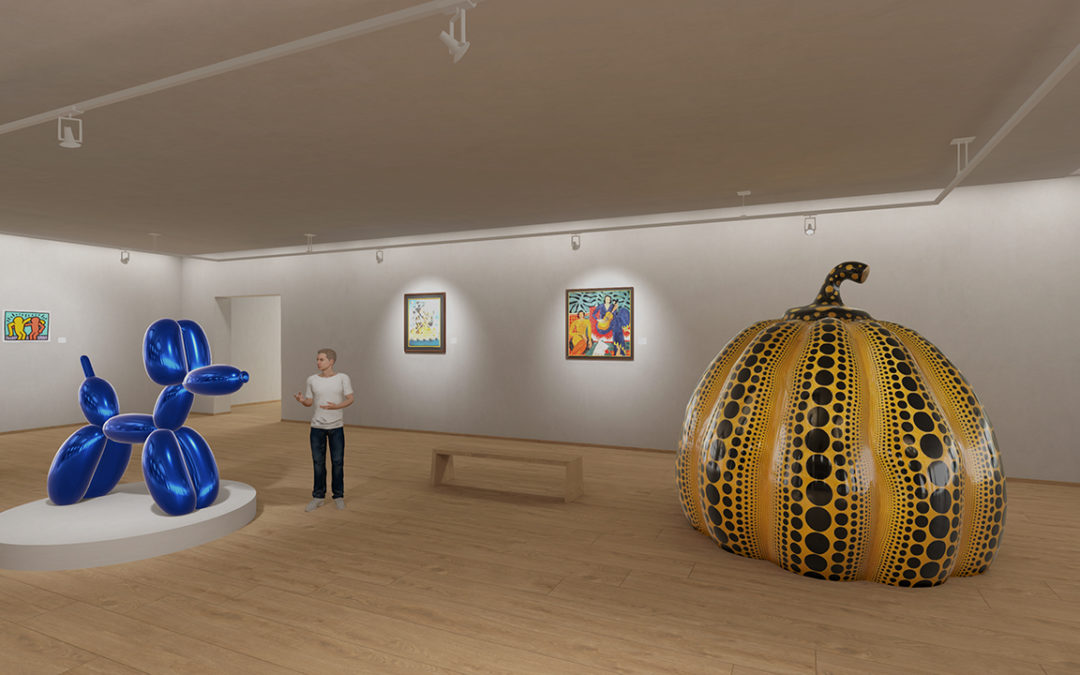
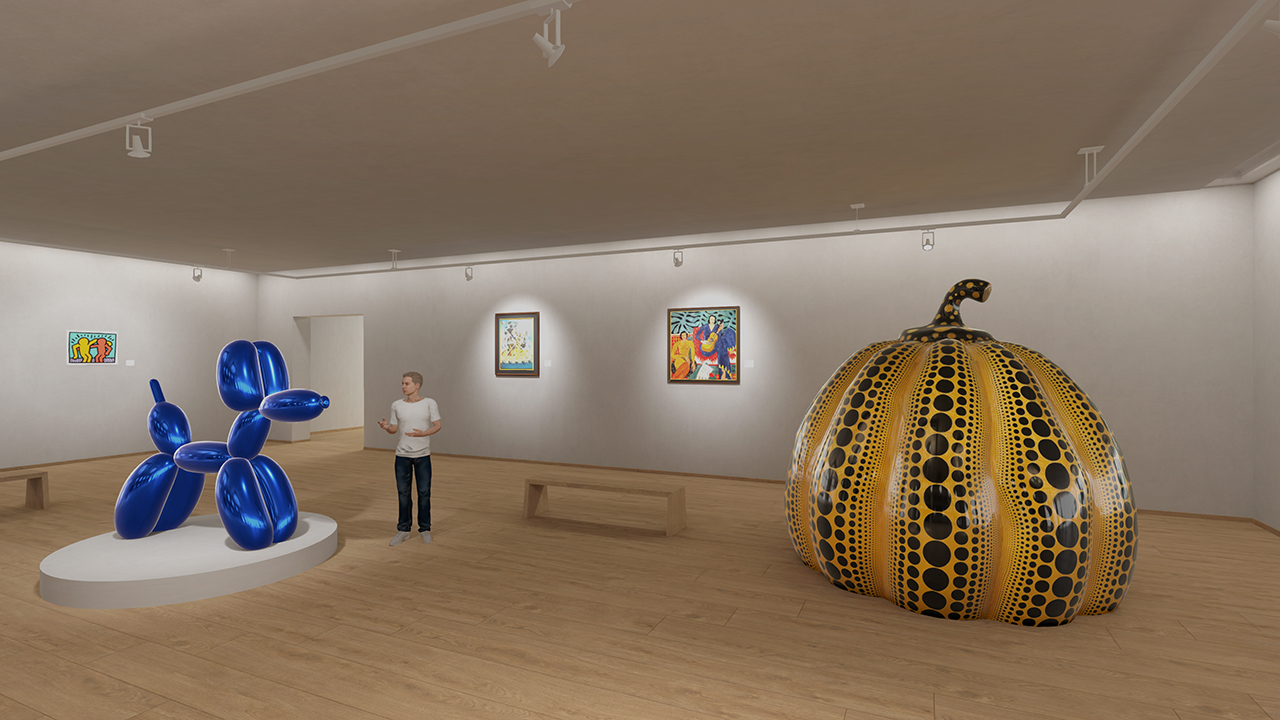
Curate XR explores how generative AI and large language models (LLMs) can enable more natural and flexible interaction with virtual agents in extended reality. The project uses a museum guide scenario as a testbed, allowing visitors to engage with an embodied virtual character through spontaneous conversation rather than predefined questions and responses.

Interaction takes place through natural speech. The virtual guide responds in real time while taking into account both predefined information about the environment and contextual data such as the user’s location and the artwork they are currently viewing. The agent can also communicate in different languages, making the interaction more intuitive and accessible to a broad range of users.

The conversational system is integrated with an animated virtual character that navigates the environment using motion matching and pathfinding. This allows the guide to move naturally through the space, accompany the user and respond not only through speech but also through embodied behavior.

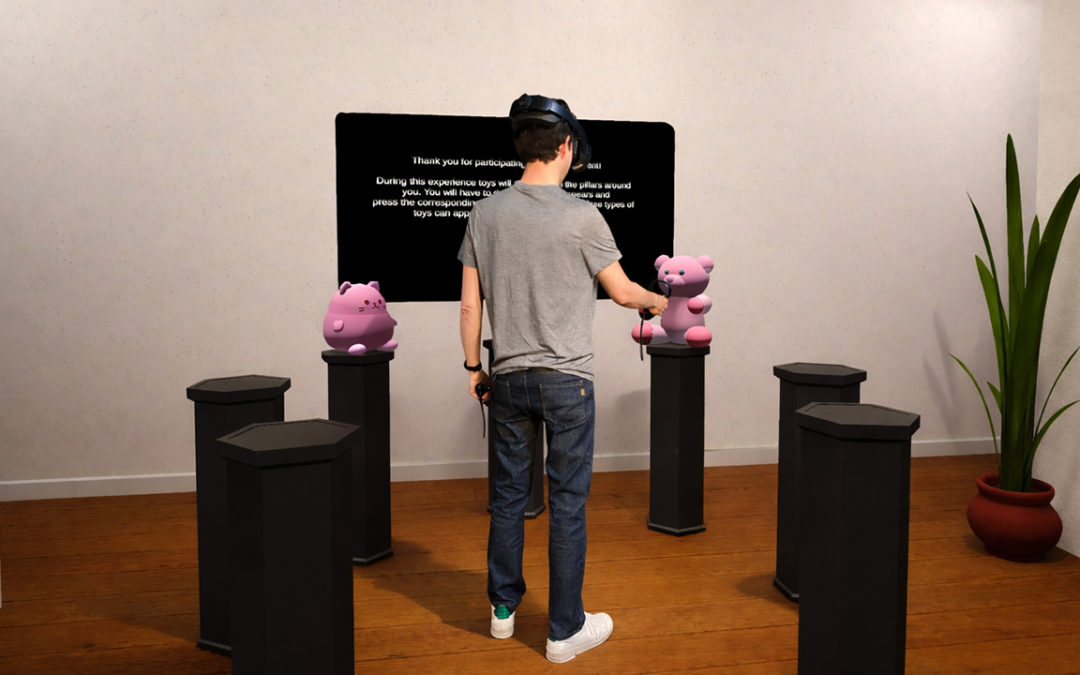
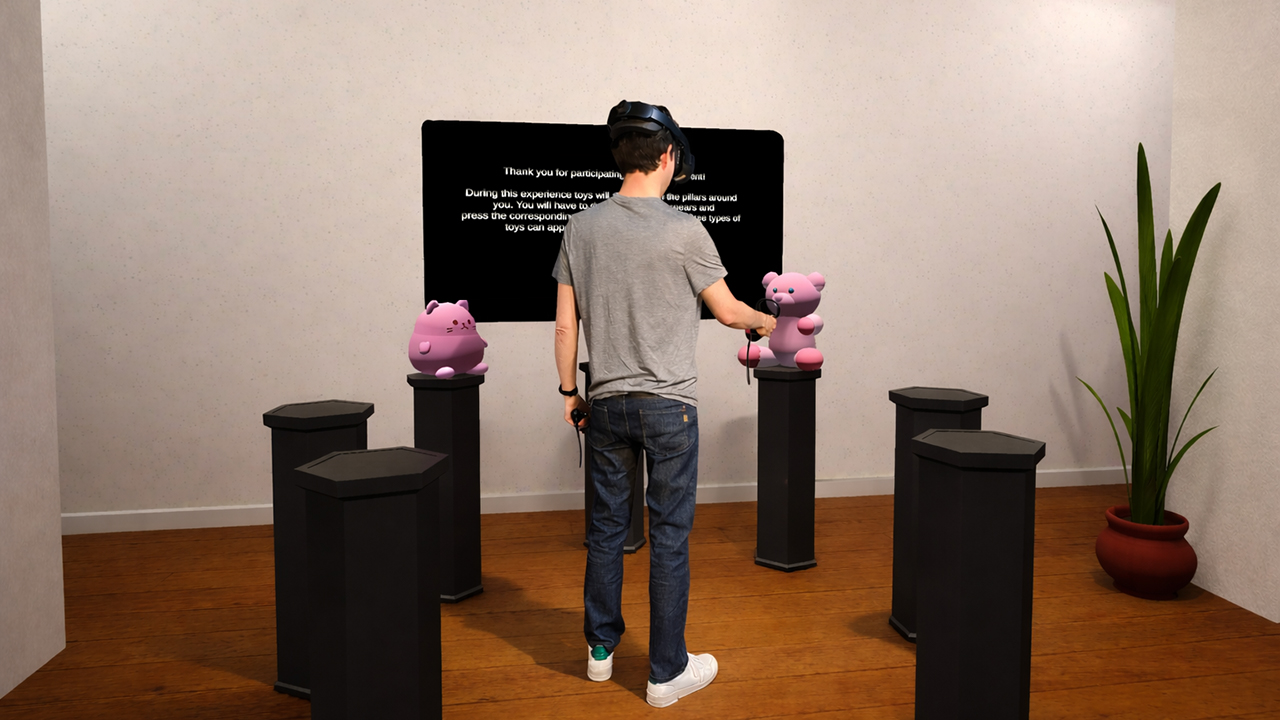
Curate XR also investigates how generative AI agents can translate spoken instructions into actions. In a virtual sculpting scenario, users can create, position, move and modify three-dimensional objects simply by describing what they want. The agent interprets these requests and updates the virtual environment accordingly, enabling iterative creation through conversation.

Although the museum setting serves as the primary research scenario, the project investigates a broader interaction framework that could be applied to training, education, rehabilitation, entertainment and other XR applications where natural communication with interactive virtual agents can improve usability and engagement.

ABC-Space

ABC-Space

ABC-Space

A VR research project exploring attention, curiosity and learning with embodied virtual agents.

Project Info

Start date

September 2024

End date

August 2028

Funding

Swiss National Science Foundation (SNSF) – Grant No. 10000279

Website

SNSF project page

Coordinator

Artanim

Summary

ABC-Space investigates how attention and curiosity unfold in three-dimensional space and how they influence learning in immersive virtual reality. The project focuses in particular on educational VR experiences involving embodied social virtual agents.

The research examines how social signals generated by interactive virtual characters affect cognitive and motivational processes involved in attention, memory and learning. Through new experimental paradigms in VR, the project studies the relationships between curiosity, attention, spatial representation and memory, and how these mechanisms interact in fully immersive environments.

The results aim to contribute to VR science, cognitive science and educational psychology, while informing the design of a new generation of educational virtual agents capable of supporting attention and learning more effectively.

Within ABC-Space, Artanim develops physics-based controllers trained with deep reinforcement learning to drive virtual characters, produces the immersive VR experiments, and contributes to the design of behavioral experiments evaluating their impact on attention and learning.

Partners

Joan Llobera – Artanim
Physics-based interactive virtual characters capable of producing social signals and cues.

Patrik Vuilleumier – University of Geneva, Laboratory for Behavioral Neurology and Imaging of Cognition (LABNIC)
Cognitive and affective processes governing human attention in space.

Mireille Bétrancourt – University of Geneva, Educational Technologies (TECFA)
Models of spatial representation used to form cognitive maps and their impact on educational VR experiences.

Related Publications

Deschanet C, Kreienbühl L, Vuilleumier P, Llobera J. Adapting the Posner paradigm to study 360º attention orienting in Virtual Reality, Vision Sciences Society, May 2026.
PDF

PRESENCE

PRESENCE

PRESENCE

An XR research project advancing realistic remote presence, interaction and social behavior.

Project Info

Start date

January 2024

End date

April 2027

Funding

European Commission (Grant Agreement No. 101135025) and SERI (Ref. 1131-52104)

Coordinator

Fundació i2CAT

Website

presence-xr.eu

Summary

PRESENCE investigates how advanced XR technologies can strengthen the sense of presence in shared physical-digital environments. The project addresses key perceptual dimensions including plausibility, co-presence and place illusion, with the aim of making remote interaction feel increasingly natural and convincing.

The project focuses on three main challenges. First, it explores realistic visual interaction between remote users through live volumetric capture, compression and optimization techniques for high-quality holoportation under heterogeneous computing and network conditions. Second, it investigates realistic touch between remote users and virtual objects through novel haptic systems and spatial synchronization across multiple devices. Third, it develops more realistic social interaction through avatars, autonomous agents and AI-powered virtual humans.

Within PRESENCE, Artanim focuses on smart autonomous virtual characters capable of generating physically plausible behavior while responding to social and contextual cues from human-controlled avatars and other agents.

The research investigates how virtual agents can adapt their movement and behavior to interpersonal distance, social conventions and collaborative tasks. For example, an agent can adjust its position and orientation to respect proxemic rules, or recognize when a user needs an object and respond by retrieving and offering it.

Partners

Fundació i2CAT (Spain)

Actronika (France)

University of Hamburg (Germany)

Centre for Research and Technology Hellas – CERTH (Greece)

Raytrix GmbH (Germany)

SenseGlove B.V. (Netherlands)

Go Touch VR SAS (France)

Didimo S.A. (Portugal)

Vection Italy Srl (Italy)

University of Barcelona (Spain)

Unity Technologies (Denmark)

Sound Holding B.V. (Netherlands)

Interuniversitair Micro-Electronica Centrum – imec (Belgium)

JOANNEUM RESEARCH Forschungsgesellschaft mbH (Austria)

SyncVR Medical B.V. (Netherlands)

Zaubar UG (haftungsbeschränkt) (Germany)

Artanim (Switzerland)

Related Publications

Mair S, Mostajeran F, Llobera J, Slater M, Steinicke F. Laughing Together: A Pilot Study on the Role of Virtual Agents in Emotional Contagion, Conformity, and Opinion Shaping in a Virtual Stand-Up Comedy Club, 2025 IEEE International Symposium on Mixed and Augmented Reality (ISMAR), 1479–1489, October, 2025.
PDF · DOI

Llobera J, Li K, Nagorny P, Charbonnier C, Steinicke F. A Conversational Virtual Agent with Physics-based Interactive Behaviour, 2025 IEEE International Symposium on Mixed and Augmented Reality Adjunct (ISMAR-Adjunct), Daejeon, South Korea, 973–974, October, 2025.
PDF · DOI

Mostajeran F, Li K, Rings S, Kruse L, Wolf E, Schmidt S, Arz M, Llobera J, Nagorny P, Charbonnier C, Fassold H, Alvarez X, Tavares A, Santos N, Orvalho J, Fernández S, Steinicke F. A toolkit for creating intelligent virtual humans in extended reality, IEEE Conference on Virtual Reality and 3D User Interfaces Abstracts and Workshops (VRW), Saint-Malo, France, 736–741, March, 2025.
PDF · DOI

MoRehab XR

MoRehab XR

MoRehab XR

A motion-tracked rehabilitation platform combining immersive exergames with objective movement assessment.

Project Info

Start date

August 2020

End date

2030 (expected)

Funding

Artanim & FORE Foundation / La Tour Hospital

Coordinator

Artanim

Summary

After stabilization surgery or a traumatic injury, physical rehabilitation is often required to restore joint function. Successful recovery depends on regular and repetitive training, but maintaining patient motivation over time can be challenging. Conventional rehabilitation can also make it difficult to objectively measure small improvements or identify a lack of progress.

MoRehab XR explores how the engaging qualities of video games can support rehabilitation through a series of exercise-based games, or exergames. Patients progress through the games by performing movements that form part of their rehabilitation program.

Using motion tracking, the platform objectively monitors recovery from session to session, adapts exercises to each patient’s abilities and needs, and helps identify persistent difficulties or insufficient progress. The resulting data also provides clinicians with quantitative information that is not readily available during conventional physical therapy.

Artanim develops the exergame platform, designs and implements the games, and creates tools for standardized assessment of patient performance. The clinical team at La Tour Hospital evaluates the usability and clinical validity of the platform.

A three-year clinical study is planned to begin following Swissmedic approval, with recruitment expected to start in early 2027. The study will evaluate the platform with patients and help assess its clinical value for rehabilitation, movement assessment and recovery monitoring.

Partners

Artanim
Design of the exergames and development of a platform to support them, along with medical assessment scores that take advantage of the motion tracking system’s extended capabilities.

La Tour Hospital – Elbow & Shoulder Orthopedics and Traumatology
Clinical testing and co-design of new physical assessment metrics adapted to the capabilities of the motion tracking system.

Related Publications

Mancuso M, Lädermann A, Schmid Dornbierer Y, Seurot A, Charbonnier C. Can the Combination of Motion Tracking and Virtual Reality Make Shoulder Rehabilitation Entertaining?, Multidiscip Biomech J, 3:47–49, 2026.
PDF · DOI

Mancuso M, Charbonnier C. Technical evaluation of the fidelity of the HTC Vive for upper limb tracking, 42nd International Conference on Biomechanics in Sports, Salzburg, Austria, July, 2024.
PDF