Artanim XRay

Artanim XRay

Artanim XRay

Revealing the data underneath

Project Info

Start date:
June 2026

End date:

Funding:

Coordinator:
Artanim

Summary

Besides its use in the entertainment industry, motion capture has proven itself to be an invaluable tool in other domains such as sports science, robotics and ergonomics, as well as for various healthcare applications.  

Particularly in healthcare scenarios however, one significant hurdle remains; equipping a patient with markers is slow and cumbersome. As such, even when a marker-based motion capture system is available, physicians for example often prefer to rely on a goniometer for manual joint angle measurements.  

This is a typical scenario where real-time markerless motion capture would be of great benefit. Tracking a patient requires nothing more than a literal click of a button, and in most cases can simply happen in the outfit they showed up in.  

But what if besides showing the physician live data on a monitor, we could also bring the tracked data to life in the examination room?  

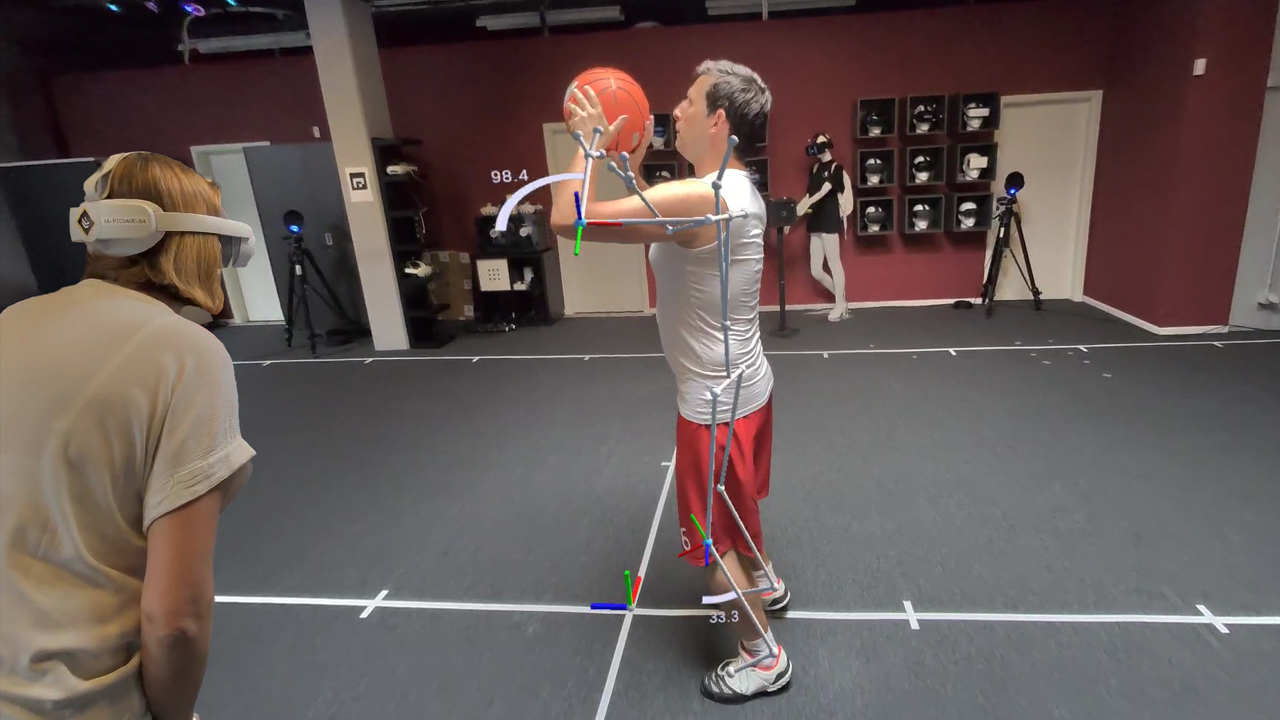
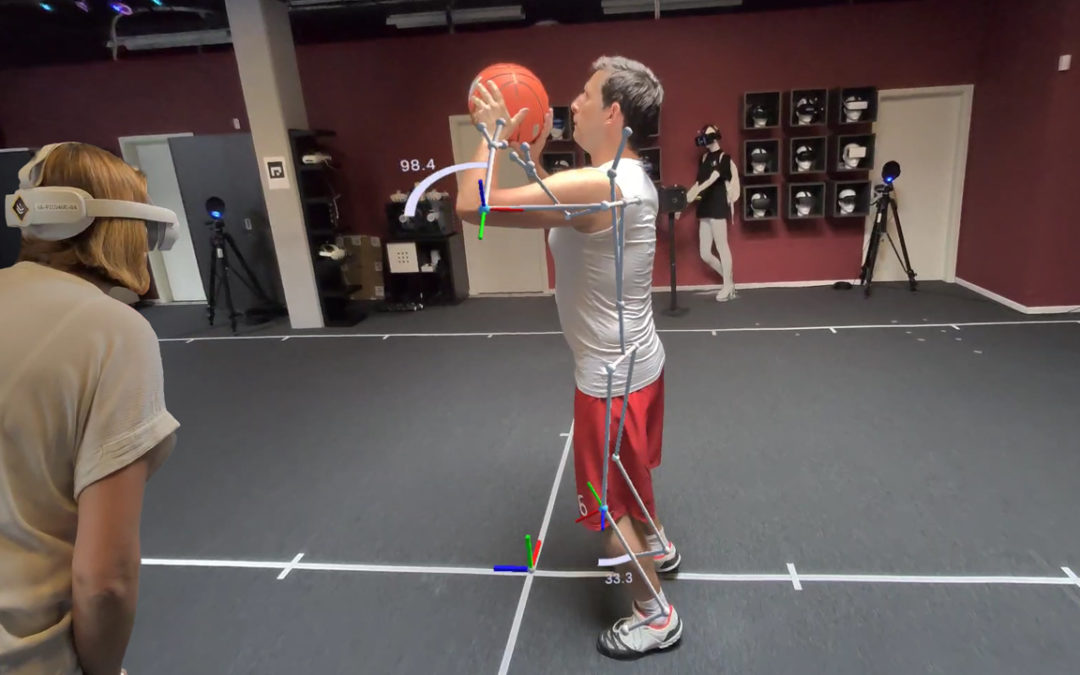
In this project we’re developing Artanim XRay, an Augmented Reality (AR) application that serves as a testbed to evaluate how real-time markerless motion capture data can be made more insightful in healthcare contexts. Similar in spirit to our earlier HoloMed project, but benefitting from a decade of technological advancement, Artanim XRay combines the “passthrough” functionality of modern XR headsets with the real-time markerless motion capture of one or more subjects and overlays the tracked skeleton on top of the live AR view of the subject.  

The application allows for the spatial selection of relevant joints – for example those for which a patient could be undergoing physical rehabilitation – and offers a set of tools to visualize relevant parameters such as joint angles and joint paths over time in real-time.  

We’re looking to expand the toolset throughout the project and aim to establish how this combination of technologies can be beneficial for healthcare, with an eye on education, evaluation and rehabilitation.  
MoRehab XR

MoRehab XR

MoRehab XR

Motion tracked rehabilitation through extended realities

Project Info

Start date:
August 2020

End date:
December 2026

Funding:

Coordinator:
Artanim

Summary

After a stabilization surgery or a traumatic accident, physical rehabilitation is often required to restore the joint’s normal function. This process requires very regular and repetitive training sessions. The regularity and involvement of the patient being critical for success of the procedure, maintaining them interested and motivated while repeating similar exercises over and over is one of the main challenges of the physical therapist. During these sessions, it is also difficult to objectively monitor small progresses or the lack of the latter. On the other end of the spectrum, some video games have proved to be very effective in motivating people to perform pretty repetitive tasks on their controllers in order to travel through a story or a challenge.

The goal of this project is to use the captivating capabilities of video games to entertain and motivate the patients through their rehabilitation, by designing a set of “exercise games” (called exergames) that will be won by performing the correct routines required for a proper physical rehabilitation. Through the use of modern motion tracking technology, the exergames will also be able to track the evolution of the physical recovery of the patients on a session per session basis, to adapt the challenges that the patients will face based on their needs and actual capacities, and if need be to alert the medical personnel early if some problems persist, or if no progresses are observed.

In this project, Artanim is in charge of building a platform suitable for these exergames, as well as designing and developing these exergames, and implementing the tools for a standard assessment of the patient’s performance. On the other hand, the medical usability and validity of the setup and exergames will be tested and assessed by the clinical team of La Tour Hospital over a large set of voluntary patients. Both teams will also work together to develop metrics to evaluate and adapt the patient’s performance during the sessions, thanks to the extended capabilities of the motion tracking system with respect to the data available in conventional physical therapy.

Partners

Artanim
Conception of the exergames and of a platform adapted to perform them, development of a set of medical scores adapted to the extended capabilities of the motion tracking system

La Tour Hospital – Division of Orthopedic and Trauma Surgery
Clinical tests, co-design of new physical evaluation metrics adapted to the motion tracking capabilities

Related Publications

Mancuso M, Lädermann A, Schmid Dorbierer Y, Seurot A, Charbonnier C. Can the Combination of Motion Tracking and Virtual Reality Make Shoulder Rehabilitation Entertaining?, Multidisciplinary Biomechanics Journal, 3:47-49, 2026.
PDF

Mancuso M, Charbonnier C. Technical evaluation of the fidelity of the HTC Vive for upper limb tracking, 42nd International Conference on Biomechanics in Sports, Salzburg, Austria, July 2024.
PDF


Mocap RSA

Mocap RSA

Mocap RSA

ROM analysis of RSA

Project Info

Start date:
January 2022

End date:
June 2023

Funding:
La Tour Hospital

Coordinator:
Artanim

Summary

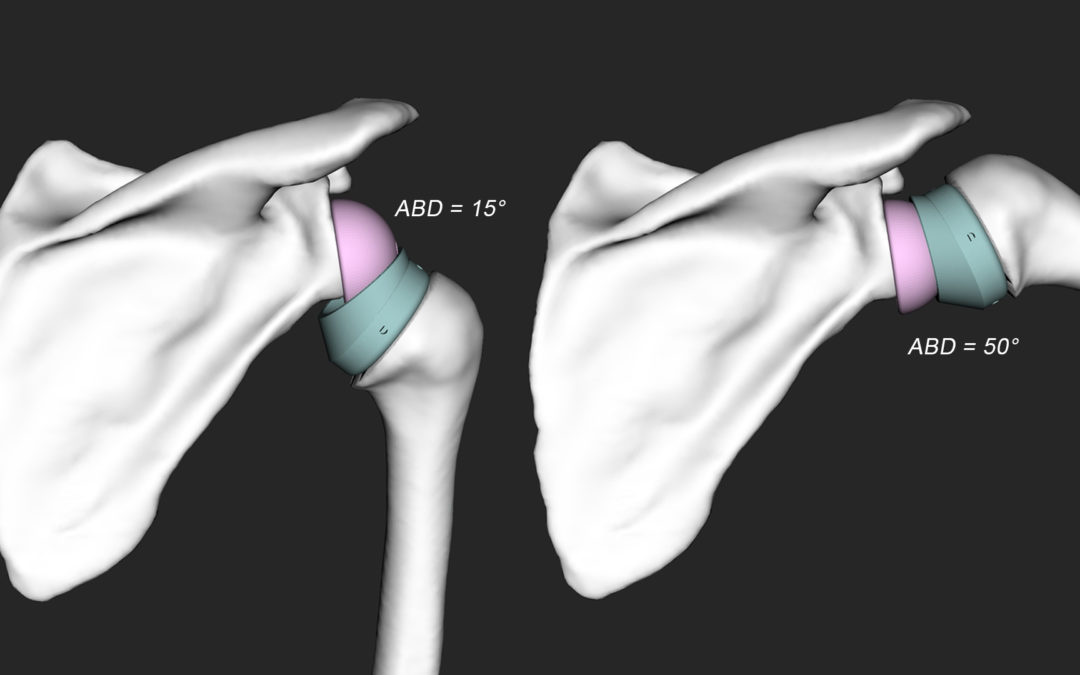
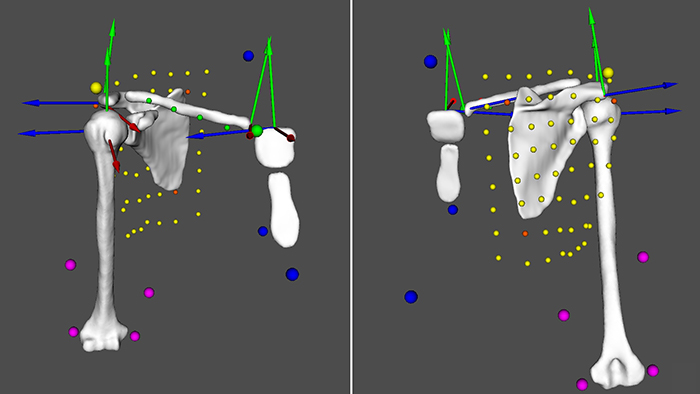
The goal of this project was to motion capture and simulate reverse shoulder prostheses (RSA) to evaluate post-operative ranges of motion during daily living activities. More specifically, we were interested at better understanding resulting glenohumeral and scapulo-thoracic motions, as well as kinematic changes after RSA.

The most challenging aspect of the project was to accurately reconstruct the post-operative prostheses of the patients. Indeed, the presence of metallic implants in CT can cause substantial image artifacts, which renders the 3D reconstruction difficult to perform. To solve this issue, patients were post-operatively scanned with a dedicated imaging protocol using a cone beam CT with reduced ionization, and a registration technique was developed to register the patients’ pre-operative 3D reconstructed bony models (scapula, humerus) and the CAD models of implants on the post-operative images.

In this project, Artanim was responsible for the segmentation and reconstruction of pre-operative and post-operative 3D bony and implants models, as well as for the dynamic simulation of reverse shoulder prostheses from motion capture data. The Haute Ecole de Santé was in charge of the post-operative registration.

Partners

Artanim
Motion capture and simulation of reverse shoulder prostheses

Haute Ecole de Santé (HEdS)
3D registration of RSA models

La Tour Hospital
Clinical tests

Related Publications

Levy G, Charbonnier C, Martinho T, Collin P, Bothorel H, Pernoud A, Lädermann A. Reverse Shoulder Arthroplasty: How to reach the back? A motion capture study to analyse glenohumeral strategies to perform functional internal rotation after RSA and in control cases, JSES International, 10(2):101515, 2026.
PDF

Levy G, Charbonnier C, Martinho T, Collin P, Bothorel H, Pernoud A, Lädermann A. Analysis of the glenohumeral and scapula-thoracic motions ratio in controls and after reverse shoulder arthroplasty, Swiss Med Wkly, 2025.
PDF

Levy G, Charbonnier C, Martinho T, Collin P, Bothorel H, Pernoud A, Lädermann A. Reverse Shoulder Arthroplasty: How to reach the back? A motion capture study to analyse glenohumeral strategies to perform functional internal rotation after RSA and in control cases, 35th Annual Congress of the European Shoulder and Elbow Society (SECEC), Rotterdam, The Netherlands, September 2025.
PDF


VR+4CAD

VR+4CAD

VR+4CAD

Closing the VR-loop around the human in CAD

Project Info

Start date:
June 2020

End date:
November 2021

Funding:
Innosuisse

Coordinator:
Artanim

Website:
https://vrplus4cad.artanim.ch/

Summary

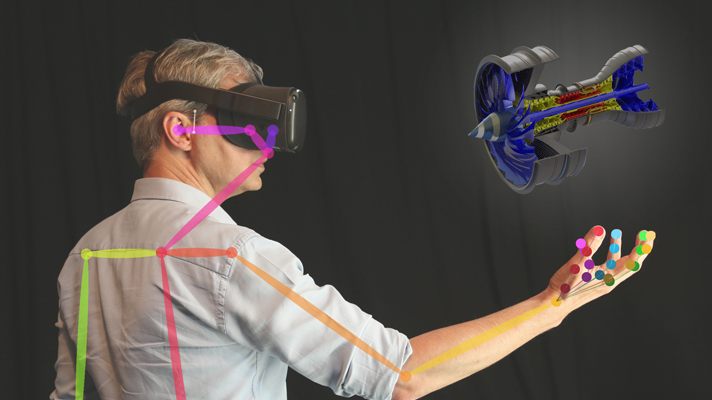
VR+4CAD aims to tackle issues limiting the use of VR in manufacture and design as highlighted by the industries: the lack of full circle interoperability between VR and CAD, the friction experienced when entering a VR world and the limited feedback provided about the experience for future analysis.

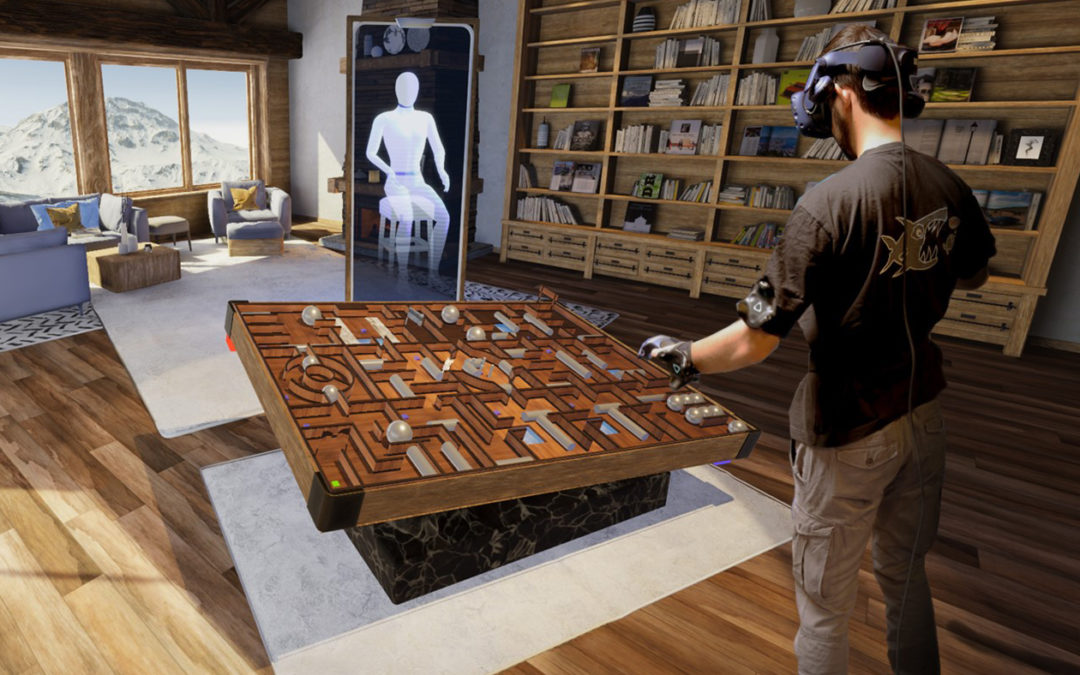
In this project, we target CAD-authored design to be automatically converted and adapted for (virtual) human interaction within a virtual environment. Interaction is made more immediate by means of an experimental, markerless motion capture system that relieves the user from wearing specific devices. The data acquired by motion capture during each experience is analyzed via activity recognition techniques and transformed into implicit feedback. Both explicit and implicit feedback are merged and sent back to the CAD operator for the next design iteration.

Partners

Artanim
Markerless motion capture, VR activity annotation

Scuola universitaria professionale della Svizzera (SUPSI)
CAD/VR interoperability, human activity recognition

Scapulo-Thoracic Alignment in B2 Glenoids

Scapulo-Thoracic Alignment in B2 Glenoids

Scapulo-Thoracic Alignment in B2 Glenoids

Dynamic analysis

Project Info

Start date:
April 2019

End date:
December 2019

Funding:
La Tour Hospital

Coordinator:
Artanim

Summary

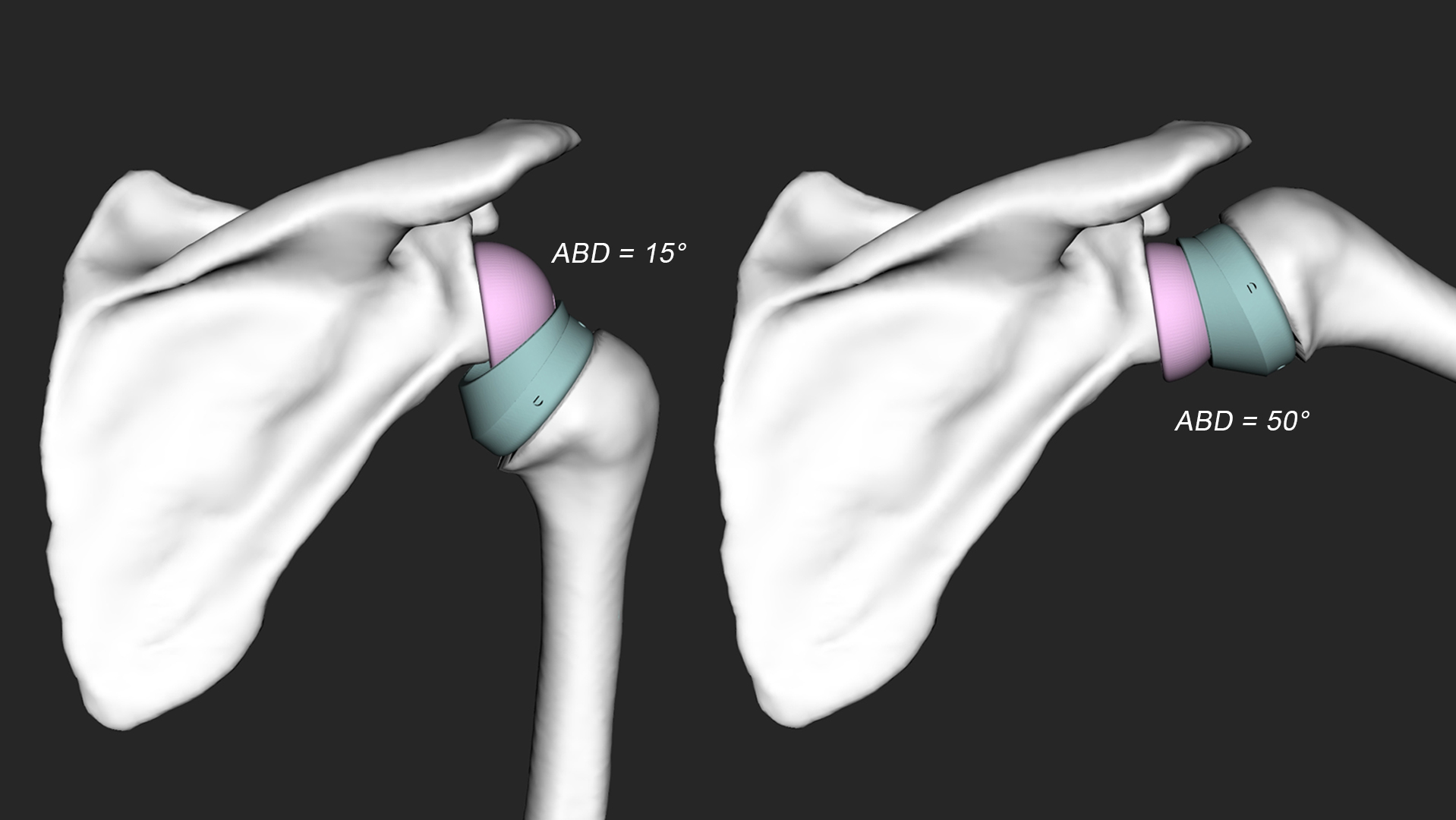
Altered scapulothoracic alignment may be a contributing pathoanatomic factor to the development of the B2 pattern of osteoarthritis. The purpose of this study was to use a patient-specific 3D measurement technique coupling medical imaging and optical motion capture to evaluate and compare scapulothoracic alignment in patients with B2 glenoids. The results of this study may improve our understanding of glenohumeral pathoanatomy and posterior glenoid erosion patterns, and assist with osteoarthritis prevention.

In this project, Artanim was responsible for dynamically simulating shoulders from kinematic data.

Partners

Artanim
Modeling and simulation of the shoulder

La Tour Hospital – Division of Orthopedic and Trauma Surgery
Clinical tests

Imaging center Rive Droite SA
Radiological acquisitions 

Related Publications

Lädermann A, Athwal GS, Bothorel H, Collin P, Mazzolari A, Raiss P, Charbonnier C. Scapulothoracic Alignment Alterations in Patients with Walch Type B Osteoarthritis: An In Vivo Dynamic Analysis and Prospective Comparative Study, J Clin Med, 10(1):66, 2021.
PDF