Shoulder Instability

Shoulder Instability

Shoulder Instability

Dynamic evaluation of instability

Project Info

Start date:
August 2014

End date:
July 2016

Funding:
La Tour Hospital

Coordinator:
Artanim

Summary

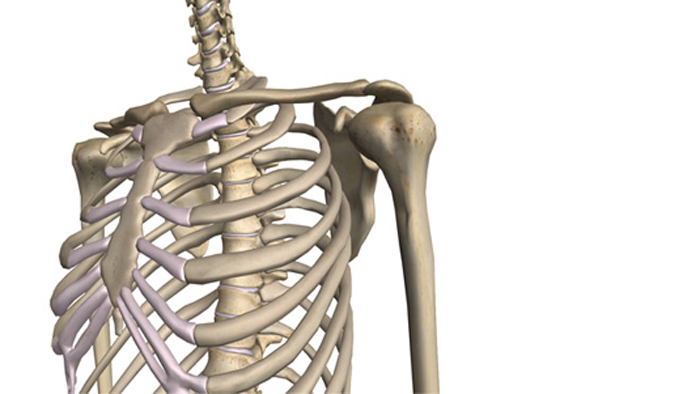
Shoulder instability is a common pathology in young or athletic adult that results in chronic dislocations or subluxations. When multiple dislocations episodes occur, surgical treatment is indicated. But this treatment really stabilizes the joint or only prevents it to dislocate?

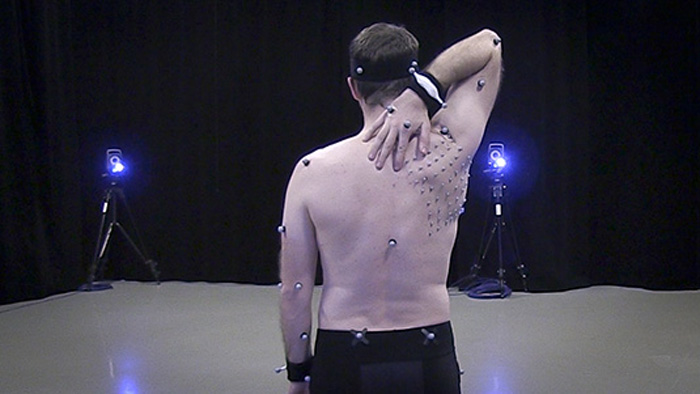
The objective of this study was to investigate and compare the shoulder stability in patients with anterior instability by performing a dynamic motion capture analysis before and after surgical treatment. The results of this study provided a better understanding of this disease, and evaluated the effectiveness of the proposed surgical treatment.

Partners

Artanim
Modeling and simulation of the shoulder

La Tour Hospital – Division of Orthopedic and Trauma Surgery
Clinical tests

Imaging center Rive Droite SA
Radiological acquisitions

Related Publications

Elsenbsy A, Charbonnier C, Juillard V, Chagué S, Zbinden J, Collin P, Ahmed M, Tammam H, Said E, Lädermann A. Capsular Repair Matters for Residual Micromotion After Latarjet. An Externally Controlled Trial from the LaTour Group, HMSJ, 2025.
PDF

Lädermann A, Denard PJ, Tirefort J, Chagué S, Cunningham G, Charbonnier C. Est-ce que les stabilisations d’épaule stabilisent les épaules ?, Congrès de la Société Francophone d’Arthroscopie 2016, Paris, France, Revue de chirurgie orthopédique et traumatologique, 102(8):S284-S285, December 2016.
PDF

Lädermann A, Denard PJ, Tirefort J, Kolo FC, Chagué S, Cunningham G, Charbonnier C. Does Surgery for Instability of the Shoulder Truly Stabilize the Glenohumeral Joint? A Prospective Comparative Cohort Study, Medicine, 95(31):e4369, 2016.
PDF

Lädermann A, Charbonnier C. Kinematics of the Shoulder Joint, Leading Opinions, 2015.
PDF
Fashioning Movement II

Fashioning Movement II

Fashioning Movement

Garment comfort visualization

Project Info

Start date:
November 2013

End date:
October 2015

Funding:
HES-SO

Coordinator:
Geneva University of Art and Design (HEAD)

Summary

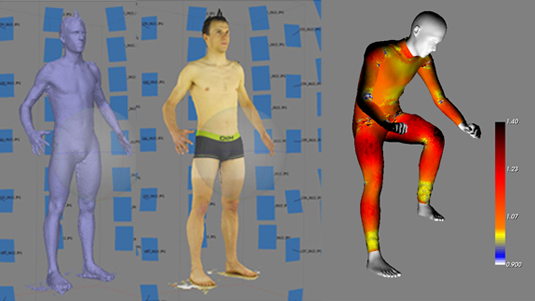
Today, the complex sensations of comfort (interaction body – clothing, suitability of fabrics, etc.) are subjectively evaluated on a static body. The goal of this project was to provide new knowledge about garment comfort and fit taking into account the body movement. The comfort sensation was objectively measured with new 3D simulation tools on animated bodies, returning numerical fitting data.

Thus, with this research, new avenues can be opened up for the development of innovative applications of advanced garment design. In particular, new pattern making methods taking into account the body movement can be imagined, an aspect that current processes are not able to consider nor apply in clothing.

A pilot project was carried out within the framework of this research, watch the video here.

Partners

Geneva University of Art and Design (HEAD)
Garments 3D design and simulation

Artanim
Motion capture, body modeling and animation, development of garment deformation analysis software

With the collaboration of Odlo International SA, Salomon SA and the Swiss Federal Laboratories for Materials Science and Technology (EMPA)

Related Publications

Mert E, Psikuta A, Joshi A, Arevalo M, Charbonnier C, Luible-Bär C, Annaheim S, Rossi R. The distribution of air gap thickness and the contact area during Alpine skiing , Proc. of 9th Int. Conf. on 3D Body Scanning Technologies, Lugano, Switzerland, October 2018.
PDF

Mert E, Psikuta A, Arevalo M, Charbonnier C, Luible-Bär C, Bueno MA, Rossi R. A validation methodology and application of 3D garment simulation software to determine the distribution of air layers in garments during walking measurement, Measurement, 117:153-164, 2017.
PDF

Luible C, Charbonnier C. Fashioning Movement: a new approach to Fashion Design, In Unfrozen – Design Research Today, Edited by Swiss Design Network, Triest Verlag, 2017.
PDF

Mert E, Psikuta A, Arevalo M, Charbonnier C, Luible C, Bueno MA, Rossi RM. Quantitative validation of 3D garment simulation software for determination of air gap thickness in lower body garments, IOP Conf. Series: Materials Science and Engineering, 254:2017.
PDF

Luible C, Charbonnier C. Fashioning Movement: a new approach to Fashion Design, Unfrozen Symposium, 1st SDN Design Research Winter Summit, Giessbach, Switzerland, January 2016.
PDF

To Fit

To Fit

To Fit

A multi-scan solution

Project Info

Start date:
June 2014

End date:
April 2015

Funding:
To Fit Sàrl

Coordinator:
To Fit Sàrl

Summary

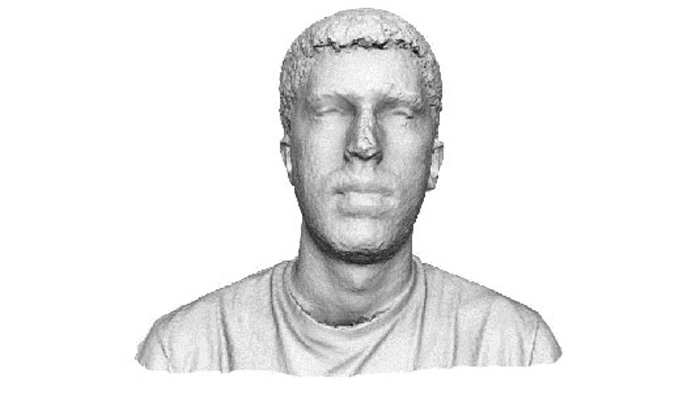
The goal of this project was to develop a solution that aimed at creating a full body avatar of the user by merging head and body scans from different scanning technologies. The first task of this project was to investigate and prototype a solution that provided good quality textured head scans using an affordable multi-cameras system. Capturing the head with sufficiently high fidelity is of great importance to provide a convincingly realistic representation of the user.

The second task was to merge the results of the head scanning with body scan data using template fitting. This process allows easy extraction of body measurements for further usage and automatic generation of an internal skeleton for animation.

Thoracic Outlet Syndrome

Thoracic Outlet Syndrome

Thoracic Outlet Syndrome

A dynamic analysis

Project Info

Start date:
March 2014

End date:
December 2014

Funding:
La Tour Hospital

Coordinator:
Artanim

Summary

Thoracic outlet syndrome (TOS) is a rare condition that involves pain in the neck and shoulder, numbness and tingling of the fingers. It happens when the nerves or blood vessels are compressed in the thoracic outlet which is the area between the rib cage and clavicle.

The goal of this study was to better understand certain causes of TOS by performing a dynamic simulation of the shoulder complex. Repetitive arm and shoulder movements, as well as anatomical defects can play a role in the development of TOS. In this study, motion capture and medical imaging (CT, MRI) were combined to improve assessment of this condition in symptomatic patients.

Partners

Artanim
Modeling and simulation of the shoulder

La Tour Hospital – Division of Orthopedic and Trauma Surgery
Clinical tests

Imaging center Rive Droite SA
Radiological acquisitions


Shoulder Rehabilitation

Shoulder Rehabilitation

Shoulder Rehabilitation

Simulation of physical exercises

Project Info

Start date:
April 2014

End date:
December 2014

Funding:
University Hospitals of Geneva

Coordinator:
Artanim

Summary

Strengthening of shoulder muscles in rehabilitation protocols and sport practice can be achieved by a wide range of different exercises and several types of technique. In presence of a rotator cuff lesion, articular cartilage pathology or instability, recommendations for design of a shoulder strength training protocol aim at avoiding or minimizing subacromial impingement and stress on the articular cartilages or labrum. Very limited objective data is at disposable to emit such recommendations.

The goal of this study was to capture and simulate 30 to 50 rehabilitation exercises to study the impact on the glenohumeral joint (e.g. cartilage’s compression, incidence of subacromial impingement) and rotator cuff (e.g. tendon lengthening of the subscapularis, supraspinatus, infraspinatus and teres minor). Ultimately, this study will better target rehabilitation exercises of the shoulder.

Partners

Artanim
Modeling and simulation of the shoulder

University Hospitals of Geneva – Unit of Physical Medicine and Orthopedic Rehabilitation
Selection of physical exercises

University Hospitals of Geneva – Department of Orthopedic Surgery and Traumatology
Medical supervision

Related Publications

Charbonnier C, Lädermann A, Kevelham B, Chagué S, Hoffmeyer P, Holzer N. Shoulder Strengthening Exercises Adapted to Specific Shoulder Pathologies Can Be Selected Using New Simulation Techniques: A Pilot Study, Int J CARS, 13(2):321-330, 2018.
PDF

Charbonnier C, Chagué S, Lädermann A, Holzer N. Évaluation des effets potentiellement délétères d’exercices de l’épaule en fonction des pathologies rencontrées, Congrès de la Société Francophone d’Arthroscopie 2016, Paris, France, Revue de chirurgie orthopédique et traumatologique, 102(8):S307, December 2016.
PDF

Holzer N, Chagué S, Lädermann A, Ziltener JL, Hoffmeyer P, Charbonnier C. High differences in subacromial space height and gleno-humeral compression according to shoulder muscle exercise type, Swiss Med Wkly, 145(Suppl. 210):32S, 2015.
PDF

Charbonnier C, Kevelham B, Chagué S, Lädermann A, Ziltener JL, Hoffmeyer P, Holzer N. Impact of Shoulder Strengthening Exercises on the Shoulder Joint, 33rd International Conference on Biomechanics in Sports, Poitiers, France, June 2015.
PDF

Charbonnier C, Kevelham B, Chagué S, Lädermann A, Ziltener JL, Hoffmeyer P, Holzer N. A Simplified Technique To Estimate Rotator Cuff Elongation During Complex Shoulder Motion, 29th International Congress of Computer Assisted Radiology and Surgery, Barcelona, Spain, Int J CARS, June 2015.
PDF

Holzer N, Chagué S, Lädermann A, Ziltener JL, Hoffmeyer P, Charbonnier C. Impact of Shoulder Strengthening Exercises on Subacromial Space Height and on Articular Cartilages and Labrum Compression Using Motion Capture Analysis, 16th EFORT Congress, Prague, Czech Republic, June 2015.
PDF